







Why NOx Sensors Fail: Common Causes, Diagnostics, and Prevention
NOx sensors are a critical component in modern vehicles with SCR (Selective Catalytic Reduction) systems, particularly diesel engines. They measure nitrogen oxide levels in the exhaust and feed data back to the ECU to regulate urea injection for emissions control. But despite being designed for harsh conditions, NOx sensors are one of the most failure-prone components in post-treatment systems. In this article, we’ll explore why NOx sensors fail, what diagnostic signs to look for, and how to prevent premature failure.
1. Contamination from Urea, Soot, or Fuel Additives
One of the leading causes of NOx sensor failure is contamination of the sensing element:
- Urea Crystal Buildup: Incomplete vaporization of DEF (Diesel Exhaust Fluid) can cause ammonia salts or crystals to form on the NOx sensor probe, blocking the diffusion holes.
- Soot Deposits: Faulty DPF (Diesel Particulate Filter) regeneration can lead to excessive soot exposure, fouling the sensor’s ceramic element.
- Fuel Additive Residue: Poor-quality fuel or excessive use of additives can cause metallic or oil-based films to form over the sensor tip.
These deposits reduce sensor sensitivity, increase response time, or cause total signal loss.
2. Wiring and Connector Failures
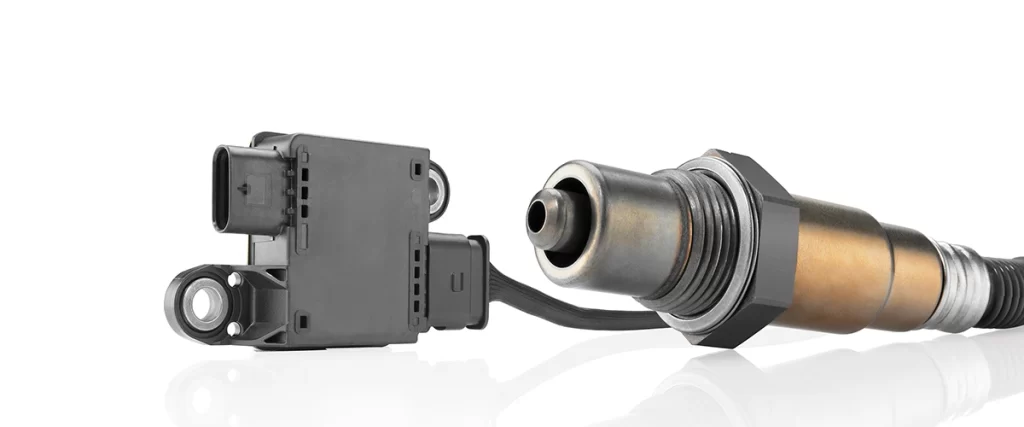
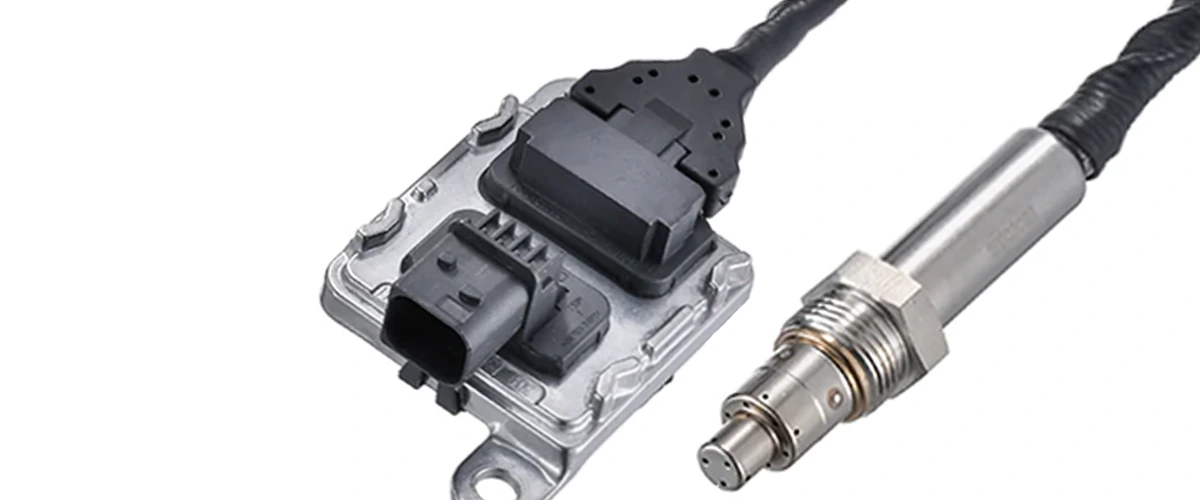
NOx sensors operate in high-heat environments (up to 800°C), and often include integrated control modules (smart sensors) connected via 5 or 6-pin harnesses.
Common wiring-related issues:
- Connector corrosion due to water ingress
- Melted insulation from proximity to turbo or exhaust
- Intermittent signal due to vibration and loose pin fit
- Short-to-ground or open circuit faults in the heater control line
Even a perfect sensing element will fail to operate if the wiring harness or connector is compromised.
3. Heating Element Malfunction
Most NOx sensors use a ceramic sensing cell that requires a precisely regulated temperature (typically ~800°C) for accurate operation.
Failure modes include:
- Heater circuit open or shorted
- Sensor not reaching operating temp (P2201, P2202 codes)
- Overheating damage due to ECU overdrive or thermal runaway
Symptoms:
- DTCs related to heater performance (e.g., P2203, P229F)
- Cold-start failure or delayed sensor readiness
- Emissions warning light triggered
The heating element is often the first internal component to degrade due to thermal fatigue.
4. Software or ECU Communication Errors
Modern NOx sensors are smart devices with onboard microcontrollers and CAN/LIN communication interfaces.
Potential faults:
- ECU communication timeout
- Incorrect software calibration (especially after ECU remapping or retrofit)
- Incompatible replacement sensor (wrong part number or firmware)
Sensor may show no physical damage, but will be invisible to diagnostic tools or report invalid data.
5. Moisture Ingress and Condensation
Water entry through the tailpipe or from high-pressure underbody washes can:
- Crack the ceramic cell via thermal shock
- Short internal circuits of the sensor control unit
- Corrode PCB elements inside the sensor module housing
Preventive tip:
- Ensure the sensor uses a waterproof connector and is installed with the correct angle to drain condensation.
6. Aging and Thermal Fatigue
Even under ideal conditions, NOx sensors are wear items. Over time, they suffer from:
- Oxygen ion depletion in the ceramic element
- Sensor drift (gradual loss of accuracy)
- Cycle fatigue from repeated heating/cooling (especially in urban driving)
Typical OEM sensor lifespan:
- 100,000–150,000 km Aftermarket sensors may vary more widely depending on quality.
How to Diagnose NOx Sensor Failure
Common diagnostic methods:
- OBD-II DTCs: P2202, P2203, P229F, P103C, etc.
- Live data reading: Compare pre- and post-SCR NOx levels
- Resistance test: Check heater circuit (usually 2–5 ohms)
- Oscilloscope: Check for proper PWM/CAN signal waveform
- Sensor self-diagnosis line: Many sensors include a pin for diagnostic status reporting
Always test wiring continuity before replacing the sensor itself — in many cases, the harness is the real culprit.
How to Prevent Premature NOx Sensor Failure
- Use high-quality DEF fluid that meets ISO 22241
- Ensure correct DPF function to reduce soot load
- Avoid engine ECU tuning that modifies injection or SCR logic
- Protect sensor harnesses from heat and water exposure
- Replace sensors with compatible OEM-spec units — mismatched resistance or communication protocol will trigger new faults
NOx sensor failure is not always a simple part defect — it’s often the result of upstream issues, environmental factors, or integration errors. Understanding the root causes can save workshops and vehicle owners unnecessary replacements and improve long-term emissions system reliability.
As an engineer, I recommend treating the NOx sensor not just as a component, but as a system indicator — its failure often reveals deeper engine or aftertreatment issues.
Series Navigation
- Understanding NOx Sensors: Basics and Importance
- NOx Sensor Technology Deep Dive
- Integration of NOx Sensors in SCR After-Treatment Systems
- NOx Sensor Selection Criteria for Aftermarket Applications
- Troubleshooting and Maintenance of NOx Sensors
- ✅Why NOx Sensors Fail: Common Causes, Diagnostics, and Prevention
- Guide of Troubleshoot a NOx Sensor
- How to Replace a NOx Sensor: Step-by-Step Guide
- Common Faults in NOx Sensor Replacement