








Step-by-Step Blind Spot Sensor Replacement Guide
Pre-Replacement Preparation
Critical Safety Precautions
- ⚠️ Disconnect battery (wait 15 min for capacitor discharge)
- 🧤 Wear ESD-safe gloves (sensors contain static-sensitive components)
- 🛑 Never force connectors (pins bend at 0.5N pressure)
- 📏 Prepare calibration space (5m × 15m clear area)
Tools & Materials
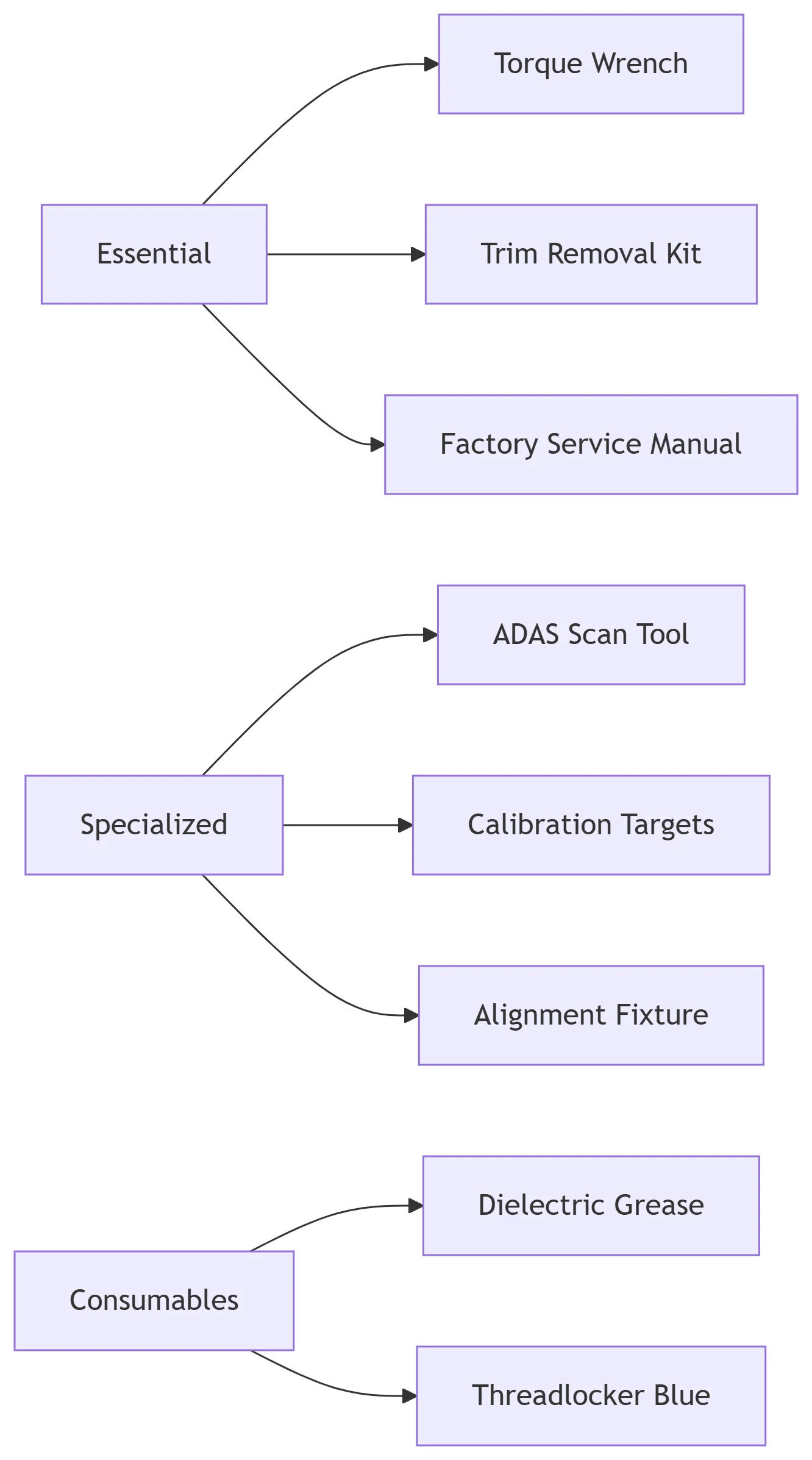
Pre-Installation Checklist
- Verify correct part number (cross-check VIN)
- Check sensor firmware version
- Inspect wiring harness for damage
- Clear DTCs before removal
Replacement Procedure (Sedan/SUV Example)
Step 1: Accessing the Sensor
- Remove rear wheel (for fender liner access)
- Detach interior trunk trim:
- Remove 8 plastic clips (press center pin first)
- Release 4 Christmas tree fasteners (twist 90°)
- Peel back sound deadening material
Step 2: Sensor Removal
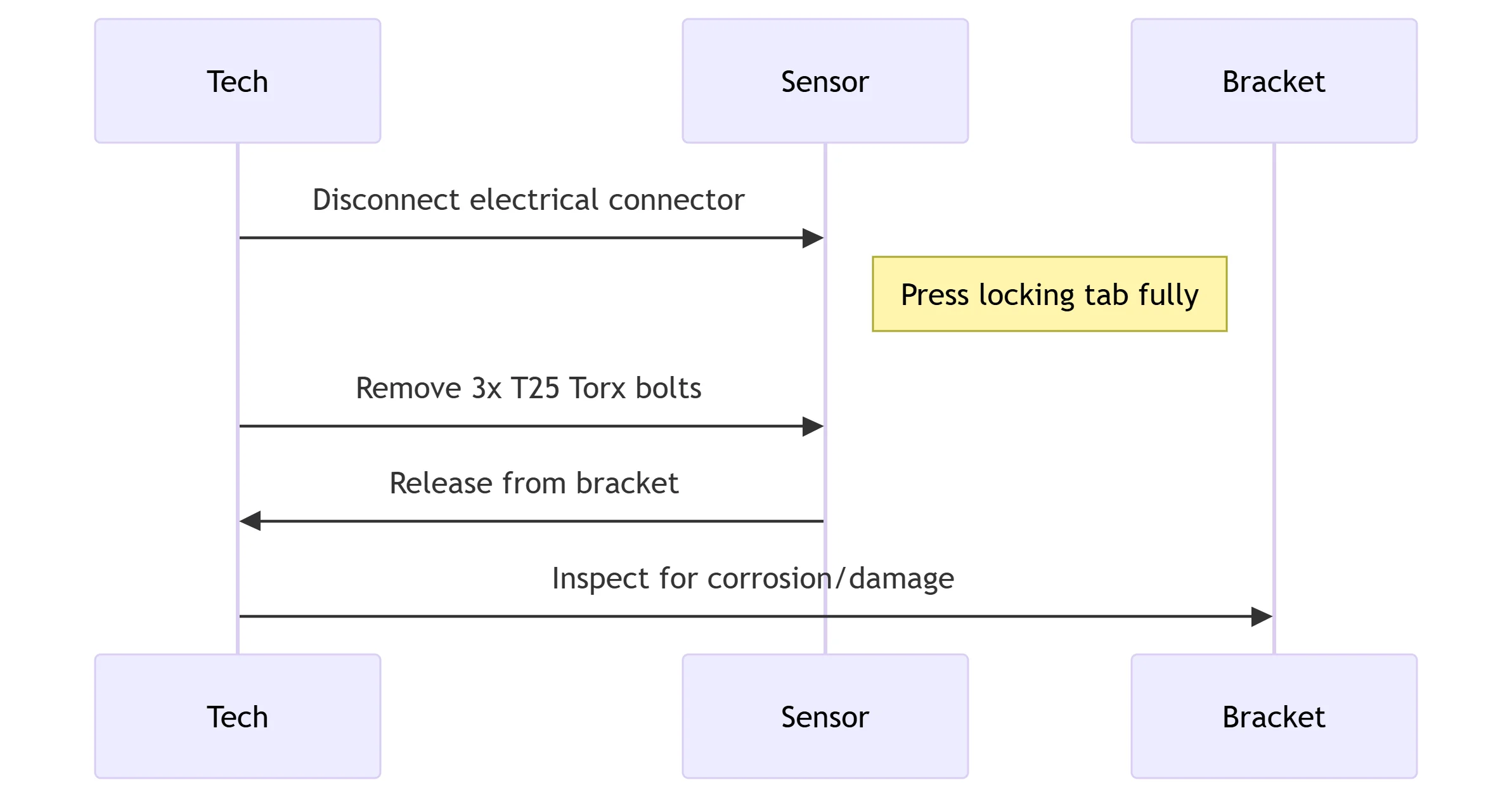
Critical Measurements:
- Bolt torque pattern: Star sequence
- Removal force: Never exceed 5N
Step 3: New Sensor Installation
- Prep surfaces:
- Clean bracket with isopropyl alcohol
- Apply dielectric grease to connector
- Mounting procedure:
- Position sensor flush against bracket
- Hand-start all bolts
- Final torque: 2.4 Nm ± 0.2 (use inch-pound wrench)
- Connector engagement:
- Listen for audible click
- Tug test with 1kg force
Step 4: Reassembly
- Reverse removal steps
- Critical: Replace all one-time clips
- Apply threadlocker to bumper bolts
Calibration Procedures
Static Calibration (Workshop Method)
- Target Setup:
- Position reflective targets 2.5m from vehicle
- Align to manufacturer grid pattern
- Scan Tool Process:

- Tolerance Thresholds:
- Horizontal: ±0.3°
- Vertical: ±0.5°
- Distance: ±2cm
Dynamic Calibration (Road Test)
- Drive requirements:
- 15-minute continuous drive
- 64-80 km/h (40-50 mph)
- Straight highway preferred
- Verification:
- Scan tool: “Calibration Successful”
- Live data: Detection confidence >95%
Post-Installation Verification
Validation Tests
| Test Type | Procedure | Pass Criteria |
|---|---|---|
| Static | Bicycle target @ 5m | Detection within 1.2s |
| Dynamic | 30° approach @ 30km/h | Alert at 10±1m |
| Environmental | Light rain simulation | <5% false alerts |
Required Documentation
- Before/after calibration reports
- Replacement part certification
- Sensor alignment measurements
- System functionality sign-off
Common Installation Errors
| Mistake | Consequence | Prevention |
|---|---|---|
| Over-torquing | Radar field distortion | Use preset torque wrench |
| Connector mismatch | ECU damage | Verify pin-to-pin compatibility |
| Skipping calibration | System disablement | Pre-schedule calibration time |
| Wrong mounting angle | Blind zone gaps | Use laser alignment tool |
Professional Tips
- Thermal Management:
- Allow sensor to acclimate to ambient temperature
- Never install cold sensor on warm vehicle
- EMI Prevention:
- Route wires 15cm from high-voltage cables
- Add ferrite cores on power leads
- Software Best Practices:
- Flash latest firmware before installation
- Perform network reset after replacement
“I’ve replaced 300+ BSD sensors. The 3 golden rules? Torque precisely, calibrate religiously, and never assume pinouts match.”
- Carlos Mendoza, Audi Certified ADAS Tech
Warranty & Compliance
- OEM Requirements:
- Calibration certificate mandatory for warranty
- Use only approved diagnostic tools
- Legal Considerations:
- FMVSS 126 compliance verification
- Document all steps for liability protection
Series Navigation
- What is a Blind Spot Detection Sensor and Why It’s Critical for Road Safety
- How BSD Sensors Work with Lane Keep Assist and Cross-Traffic Alert
- Ruggedized BSD Solutions for Commercial Trucks and Heavy-Duty Vehicles
- Decoding Common BSD Sensor Fault Codes and Troubleshooting Steps
- Choosing the Right BSD System for Your Vehicle or Fleet
- Maintenance and Calibration of Blind Spot Detection Sensors
- Compact and Integrated BSD Designs for Modern EVs and Compact Cars
- Why BSD Sensors Fail: Causes, Warning Signs, and Prevention
- Step-by-Step Guide to Diagnosing BSD Sensor Issues
- ✅Replacing a Blind Spot Detection Sensor: Step-by-Step Instructions
- Common Pitfalls During BSD Sensor Replacement & How to Avoid Them

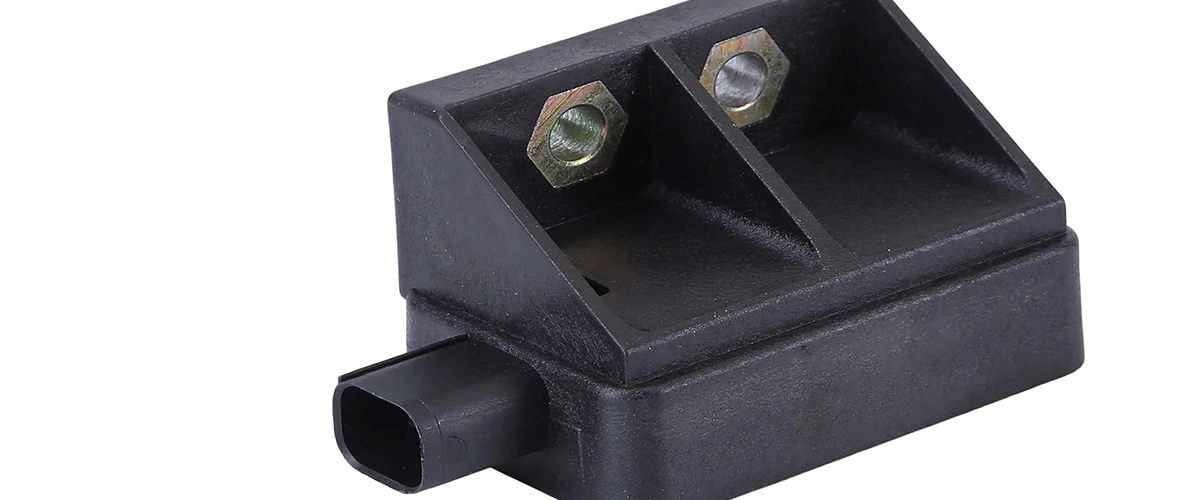
Related article resources and products
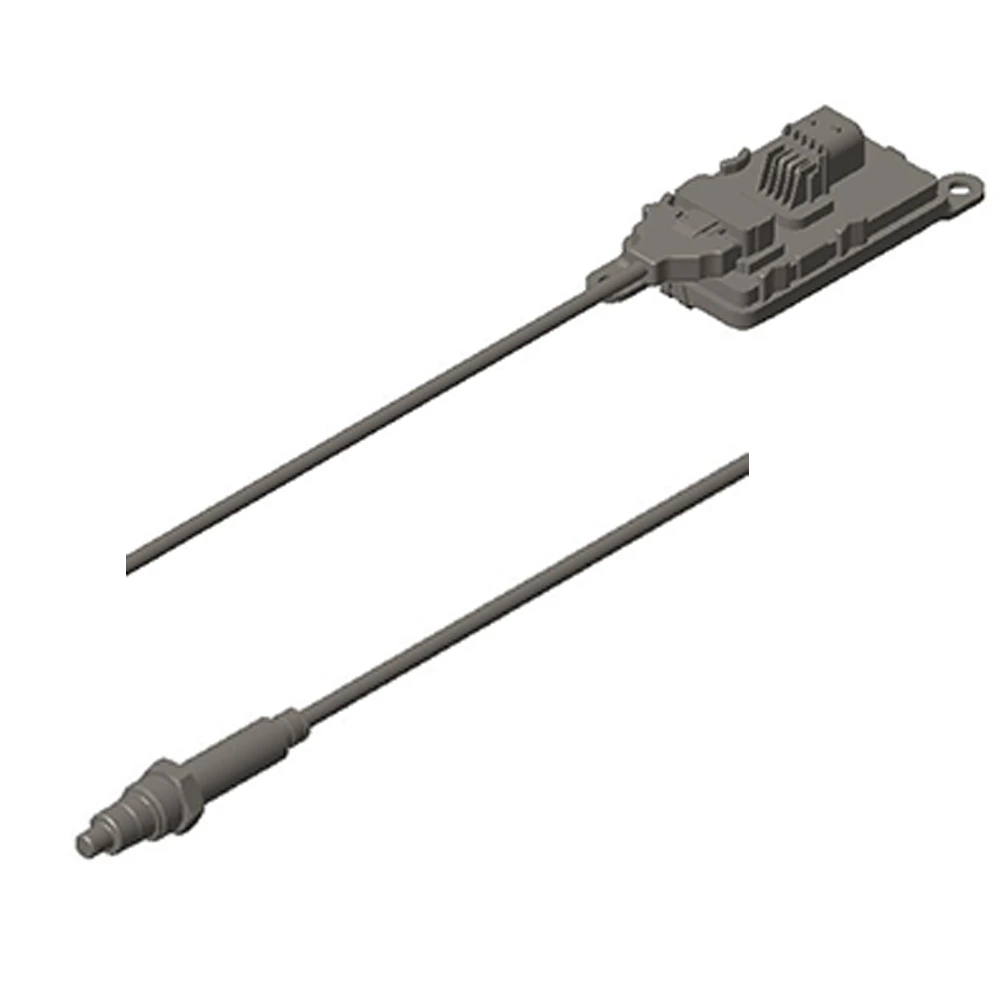
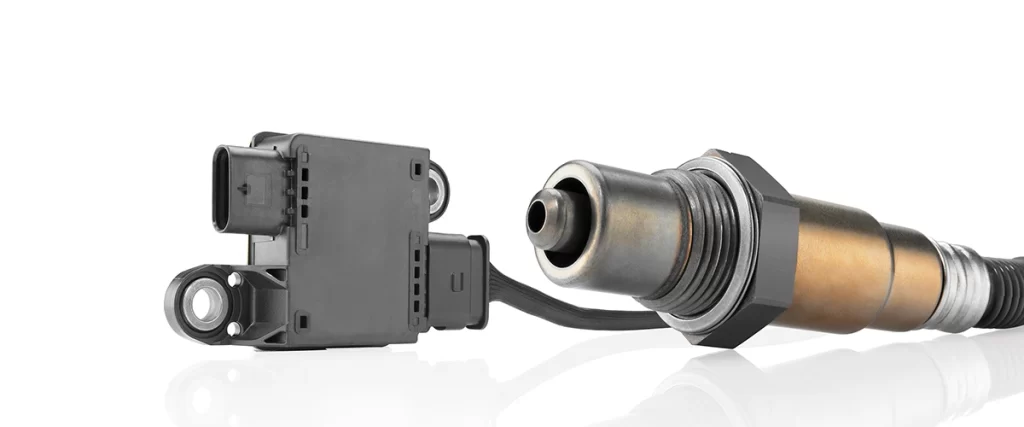
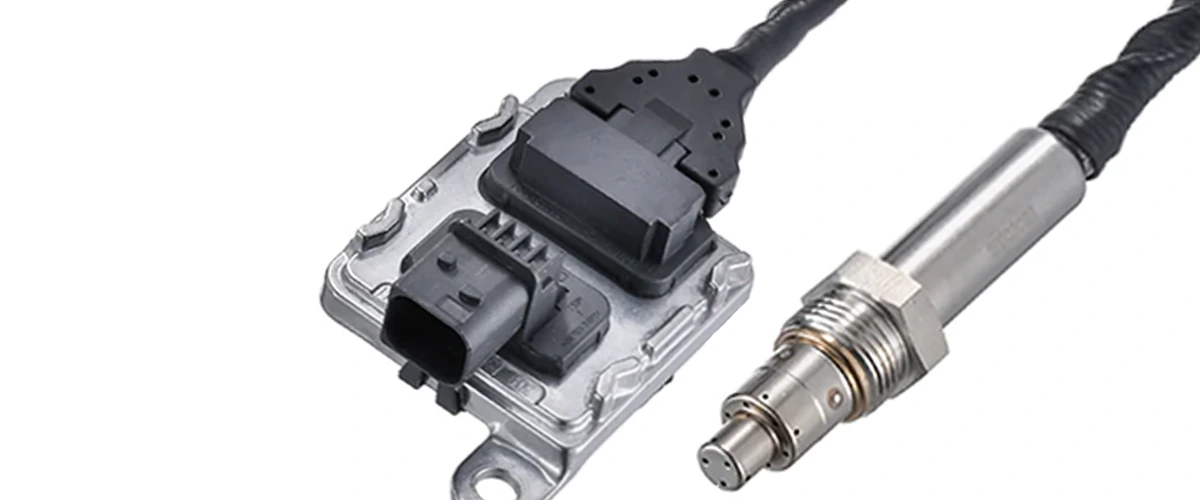
NOx Sensor
MOOCAR is dedicated to offering premium NOx sensor solutions that have been meticulously selected and tested. 1.MOOCAR NOx sensor employs state-of-the-art solid electrolyte and catalytic…
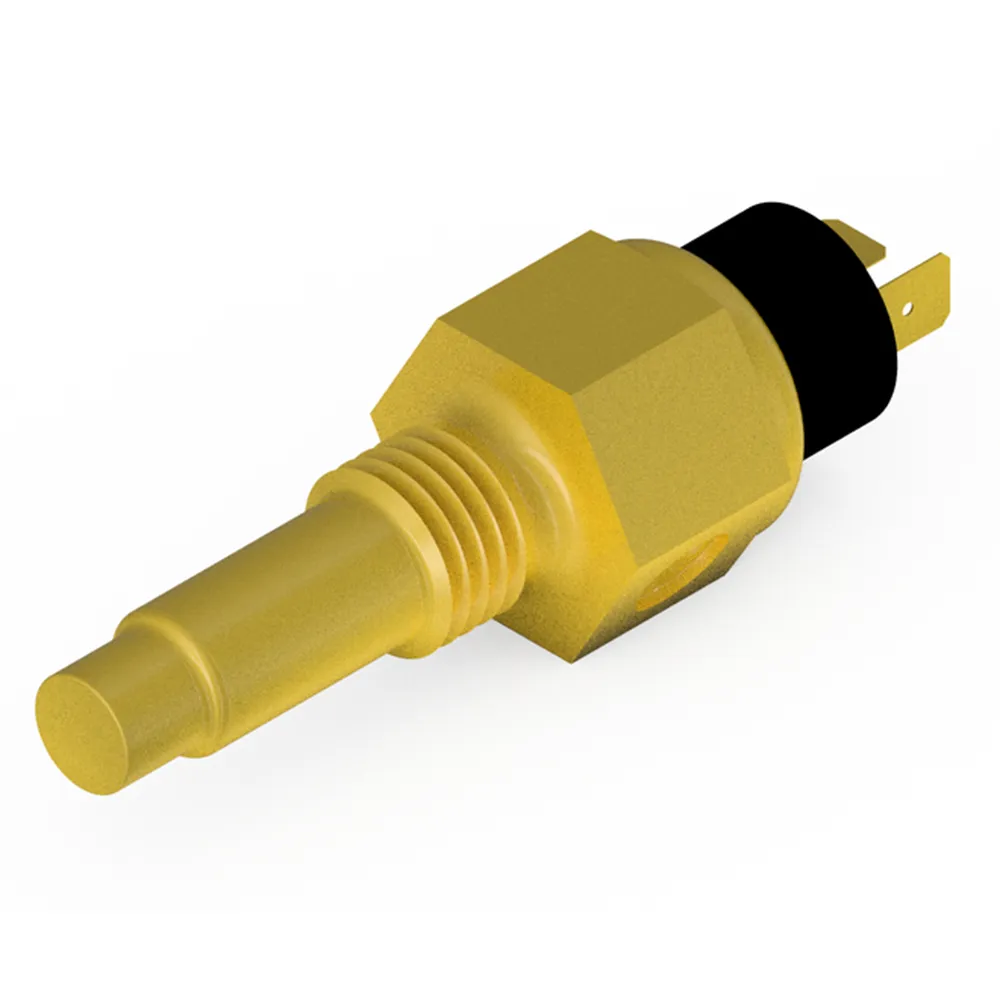
Coolant Temperature Sensor
MOOCAR Coolant Temperature Sensor provides real-time monitoring of engine temperature for optimal thermal management. MOOCAR Coolant Temperature Sensor production processes comply with IATF16949 and ISO14001…
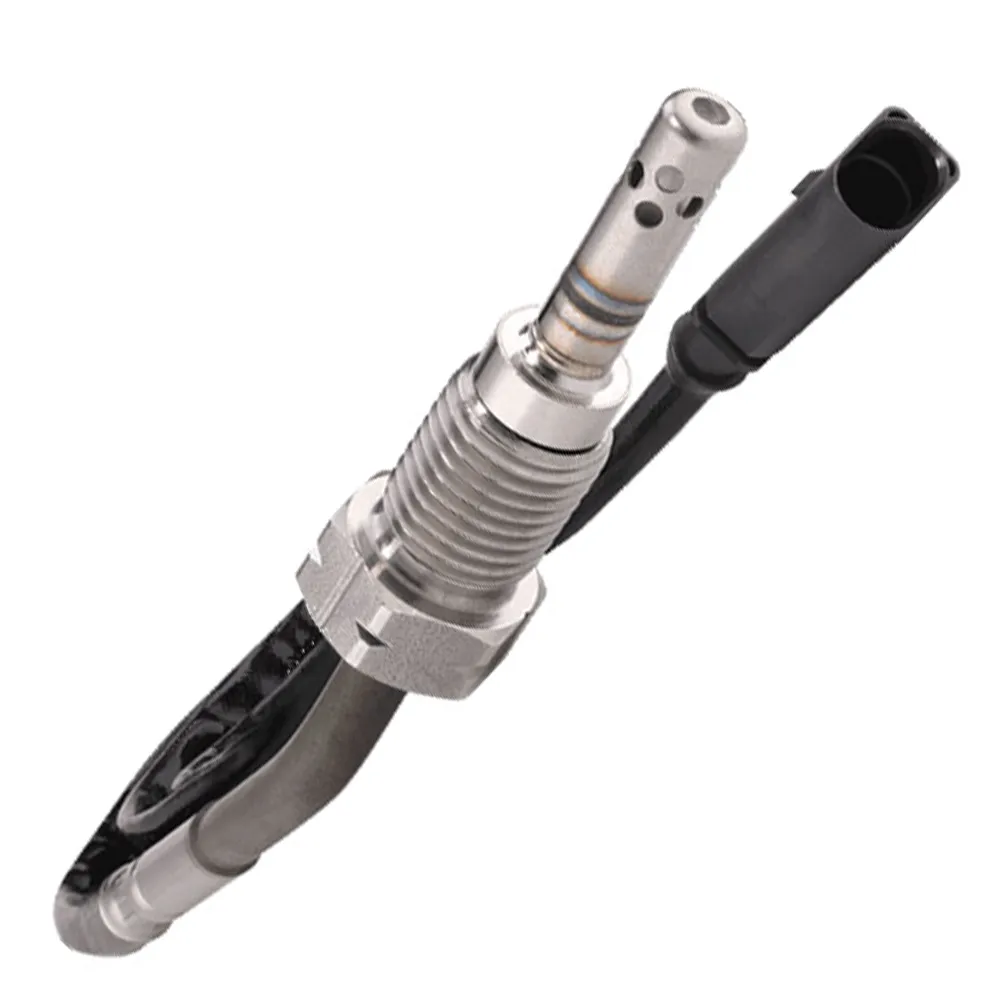
Exhaust Gas Temperature Sensor
MOOCAR Exhaust Gas Temperature Sensor provides accurate measurements critical for emission control. MOOCAR Exhaust Gas Temperature Sensor production processes comply with IATF16949 and ISO14001 standards,…

Yaw Rate Sensor Core Components & Working Principles
An in-depth analysis of yaw rate sensor’s MEMS gyro chip, AFE signal conditioning, temperature compensation, and packaging design, explaining data acquisition and filtering algorithms.
Yaw Rate Sensor Interfaces
Details yaw rate sensor interfaces (analog, CAN, LIN, SPI), installation tips
Common Faults in PM Sensor Replacement
Learn the most frequent faults encountered during PM (Particulate Matter) sensor replacement—connector damage, improper torque, skipped calibration—and how to avoid them for reliable DPF monitoring.