







Understanding Longitudinal Acceleration Sensors in Modern Vehicles
Longitudinal acceleration sensors measure forward and backward acceleration (and deceleration) of the vehicle along its X‑axis. As a manufacturing engineer in automotive electronics, I’ve seen these sensors evolve into indispensable inputs for stability control, traction management, and advanced driver assistance systems (ADAS). This article explains what they are, where they sit in the vehicle, and why they’re vital to modern vehicle dynamics.
1. What Is a Longitudinal Acceleration Sensor?
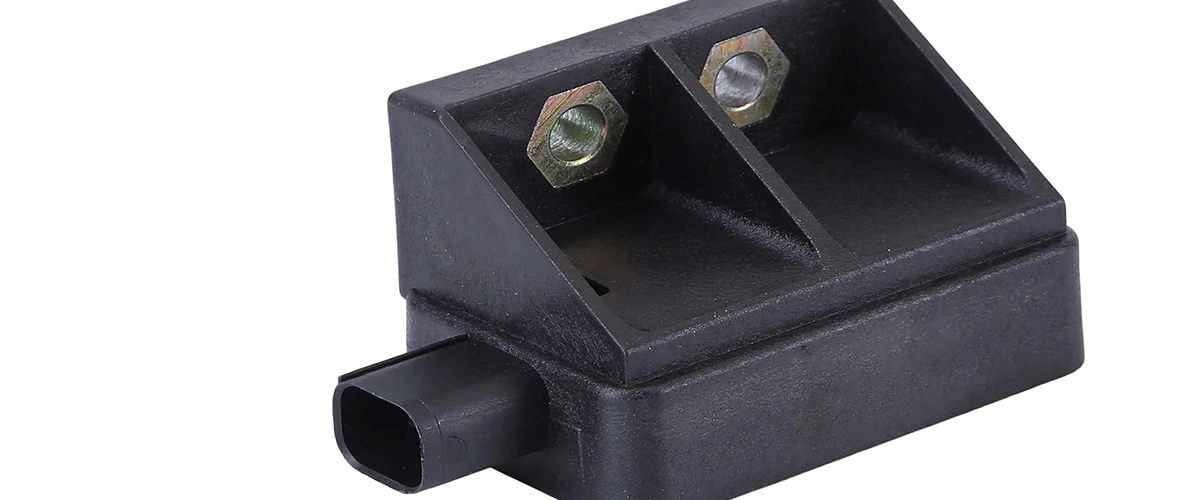
A longitudinal acceleration sensor is a specialized MEMS accelerometer designed to detect acceleration (g‑forces) along the vehicle’s fore‑aft axis. It outputs an electrical signal proportional to the acceleration, typically via an analog voltage or digital bus (CAN/SENT).
Key attributes:
- Single‑axis sensitivity (X‑axis)
- Range commonly ±2 g to ±16 g
- Resolution up to 0.001 g
- Sampling rates ≥1000 Hz for real‑time control
2. Typical Mounting Locations
For accurate measurement, the sensor must be rigidly mounted close to the vehicle’s center of gravity. Common locations include:
- Under the dashboard, on the central body frame
- Integrated into the Electronic Stability Control (ESC) ECU module
- On the vehicle’s floor pan, near the firewall
Proper alignment ensures that only longitudinal forces are measured, avoiding cross‑axis interference.
3. Role in Vehicle Dynamics and Safety Systems
- Electronic Stability Control (ESC/ESP)
- Compares measured longitudinal/deceleration against driver commands
- Helps detect understeer or oversteer when combined with yaw rate and lateral acceleration data
- Traction Control System (TCS)
- Monitors wheel slip by comparing wheel speed changes to vehicle acceleration
- Modulates engine torque and braking to maintain traction
- Adaptive Cruise Control (ACC) & Automatic Emergency Braking (AEB)
- Uses longitudinal acceleration data to gauge closing speed and distance
- Triggers smooth deceleration or emergency braking when a hazard is detected
- Launch Control & Hill Start Assist
- Provides precise acceleration feedback for optimized take‑off control
- Prevents rollback on inclines by holding brake pressure until acceleration is detected
4. Why Precision and Reliability Matter
- Latency: Sensors must report within a few milliseconds to ensure timely ECU intervention.
- Resolution: High resolution (≤0.001 g) allows fine control of torque and braking forces.
- Robustness: Rated for –40°C to +125°C, vibration tolerance up to 50 g, and EMI immunity per ISO 11452.
In manufacturing, we validate each sensor’s output against calibrated shakers and thermal chambers to guarantee field performance.
5. Signal Output and Integration
Common output formats:
- Analog voltage (0.5 V–4.5 V) with ratiometric supply
- Digital SENT messages for single‑wire, low‑latency communication
- CAN bus for multi‑sensor networks in high‑end ECUs
Integration best practices:
- Shielded twisted‑pair wiring to minimize EMI
- Local decoupling capacitors and TVS protection on power and signal lines
- Self‑diagnosis features to detect open‑circuit or saturation conditions
Longitudinal acceleration sensors are the unsung heroes behind many vehicle control functions—from keeping you on your line in slippery conditions to enabling smooth automatic braking. As vehicles grow smarter, these MEMS devices remain at the heart of real‑time safety and comfort systems.
In my experience, a properly specified and calibrated accelerometer can reduce ESC intervention by up to 30%, significantly enhancing both safety and driver confidence.
Series Navigation
- ✅Understanding Longitudinal Acceleration Sensors in Modern Vehicles
- Design Principles and Sensing Technologies Behind Automotive Accelerometers
- Performance Parameters: Accuracy, Bandwidth, and Drift
- Testing and Qualification of Acceleration Sensors
- Why Acceleration Sensors Fail: Top Causes, Failure Modes, and Diagnostic Guide
- How to Troubleshoot Acceleration Sensors in Modern Vehicles
- How to Install an Acceleration Sensor: Step-by-Step Guide
- Common Mistakes in Acceleration Sensor Replacement