








Yaw Rate Sensor Technical Specifications & Model Guide
Choosing the right yaw rate sensor often comes down to understanding its detailed technical specifications and available model options. This article provides a comprehensive breakdown of critical performance metrics—such as range, sensitivity, noise, and environmental ratings—and compares various models so that designers and purchasers can make informed decisions.
Key Technical Specifications
| Parameter Category | Description | Typical Value/Range |
|---|---|---|
| Full-Scale Range (FSR) | Maximum measurable angular velocity | ±150°/s, ±200°/s, ±300°/s (custom ±400°/s or ±500°/s) |
| Sensitivity | Scale factor (analog mV/°/s or digital counts/°/s) | ≈0.67 mV/°/s or 1 LSB/0.05°/s in digital interface |
| Bias (Zero-Rate Output) | Output offset at 0 °/s | ≤±0.5°/s across –40 °C to +125 °C |
| Bias Temperature Drift | Bias change over full temperature range | ≤±0.5°/s |
| Sensitivity Drift | Sensitivity change over full temperature range | ≤±2% FS across –40 °C to +125 °C |
| Noise Density | Noise level per √Hz | ≤0.005°/s/√Hz |
| Resolution | Minimum detectable angular velocity change | ≤0.01°/s |
| Response Time (T90) | Time to reach 90% of final value after step change | ≤10 ms |
| Bandwidth | Effective frequency response | DC–70 Hz (high-end: DC–100 Hz) |
| Supply Voltage | Operating voltage range | 8 V–16 V (12 V typical for passenger cars; some support 24 V) |
| Power Consumption | Operating current or power | ≤25 mA / ≤300 mW |
| Operating Temperature | Ambient temperature for reliable operation | –40 °C to +125 °C |
| Storage Temperature | Temperature limits for shipment and long-term storage | –55 °C to +150 °C |
| Shock Rating | Peak shock energy the device can withstand | ≥±100 g (6 ms half-sine) |
| Vibration Rating | Random and sinusoidal vibration tolerance | ISO 16750-3 random (20 Hz–2000 Hz); 5 g sinusoidal |
| Ingress Protection (IP) | Dust and water ingress rating | IP6X (dust) / IPX6 (water spray) |
| Interface Protocols | Communication methods and signal outputs | Analog voltage (0.5 V–4.5 V), CAN 2.0B, LIN 2.2/2.0, SPI, I²C |
| ECU Compatibility | Common vehicle bus or diagnostic standards | CAN J1939, LIN J2602, OBD-II compatible |
Tip:
- For autonomous driving or high-end commercial vehicles, select high-bandwidth (≥100 Hz) and ultra-low noise density (≤0.003°/s/√Hz) variants.
- Analog-output versions suit cost-sensitive aftermarket installations; digital CAN/LIN versions are preferred for OEM integration.
Model Classifications & Feature Differences
- By Full-Scale Range (FSR)
- ±150°/s Series: High cost-performance ratio for typical passenger cars
- ±200°/s Series: Suited for sporty road cars and light commercial vehicles
- ±300°/s Series: Targeted at heavy trucks, buses, and extreme-speed testing
- ±400°/s & ±500°/s Series: Used in autonomous driving R&D or specialized extreme-condition applications
- By Output Interface
- Analog Voltage Output: Standard 0.5 V–4.5 V mapping to –FS–+FS; easily read by any ECU analog input, popular in low-end aftermarket
- Digital CAN Output: CAN 2.0B compliance, typical 500 kbps bitrate; robust EMI immunity, ideal for direct vehicle bus integration
- Digital LIN Output: LIN 2.2/2.0 compliance; for low-speed networks, cost-effective in budget-conscious designs
- SPI/I²C Output (Development/Test): Designed for prototype and R&D; allows direct register access and raw data debugging (not typically used in mass-production without gateway)
- By Environmental Rating & Protection
- Consumer-Grade: –40 °C to +85 °C, IP5X/IPX5; suitable for non-extreme climates and moderate road conditions
- Automotive-Grade: –40 °C to +125 °C, IP6X/IPX6; meets almost all OEM requirements
- Commercial-Grade/Heavy-Duty: –40 °C to +150 °C, IP6X/IPX7/IPX9K; designed for extreme environments (mining, high-altitude, high humidity)
- By Additional Features
- Standard: Outputs only yaw rate, with baseline accuracy and reliability, no self-diagnostics
- With Self-Diagnostics (DTC): Built-in self-test circuitry flags over-temperature, power anomalies, or sensor drift, and outputs DTC codes
- With Status Output: Extra pin (Status) provides a digital HIGH/LOW to indicate normal operation or fault
- Integrated IMU Module: Combines a 3-axis accelerometer and 3-axis gyro in one module, providing a full 6-DOF data stream for advanced vehicle dynamics control
Performance Metrics Explained
- Noise Density & Resolution
- Noise density determines the smallest angular velocity change detectable. High-end models achieve ≤0.003°/s/√Hz.
- Resolution (e.g., ≤0.01°/s) impacts sensitivity to tiny yaw changes, crucial for low-speed maneuvering and cornering
- Response Time (T90) & Bandwidth
- T90 ≤10 ms ensures fast feedback during sudden lane changes or emergency maneuvers
- Typical bandwidth is DC–70 Hz; motorsport or autonomous test vehicles may require DC–100 Hz or higher to capture rapid yaw events
- Operating Temperature & Temperature Drift
- –40 °C to +125 °C ensures stability in both cold-start winters and hot engine-bay environments
- Zero bias drift ≤±0.5°/s and sensitivity drift ≤±2% FS across the full temperature range guarantee consistent performance
- Vibration & Shock Resistance
- Conforms to ISO 16750-3 (random vibration 20 Hz–2000 Hz) and ISO 19453 (half-sine shock ±100 g)
- Survives real-world road inputs—potholes, rough terrain—without output glitches or failures
- Ingress Protection (IP) & Corrosion Resistance
- IP6X (total dust ingress protection) / IPX6 (powerful water jets) ratings ensure reliable operation in muddy or rainy conditions
- Metal enclosure parts are anodized or zinc-plated—and circuit boards receive conformal coating—for long-term corrosion resistance
Series Navigation:
- Automotive Yaw Rate Sensor Positioning & Core Functions
- Yaw Rate Sensor Core Components & Working Principles
- ✅Yaw Rate Sensor Technical Specifications & Model Guide
- Yaw Rate Sensor Environmental Adaptability & Reliability
- Yaw Rate Sensor Interfaces
- Why Yaw Rate Sensors Fail: Root Causes, Warning Signs, and Repair Advice
- How to Troubleshoot Yaw Rate Sensors in Modern Vehicles
- How to Install a Yaw Rate Sensor: Step-by-Step Guide
- Common Mistakes in Yaw Rate Sensor Replacement

Related article resources and products
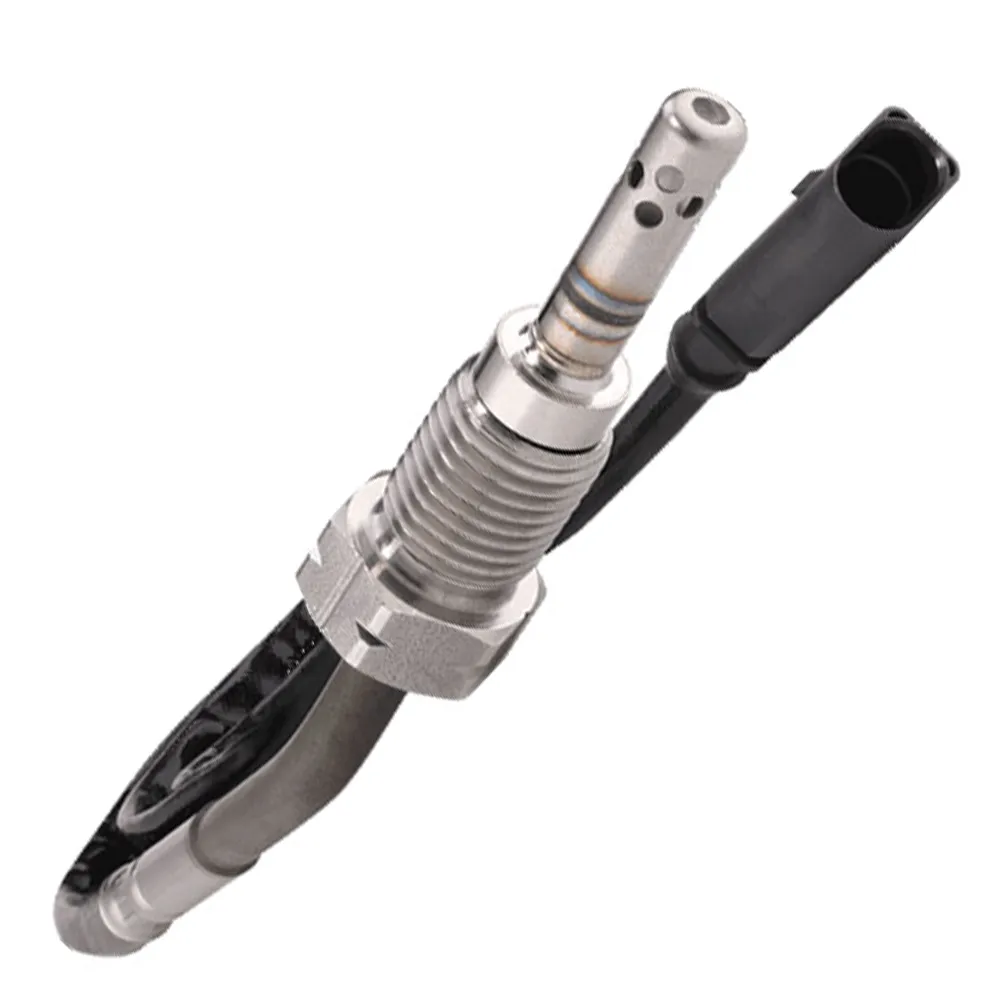
Exhaust Gas Temperature Sensor
MOOCAR Exhaust Gas Temperature Sensor provides accurate measurements critical for emission control. MOOCAR Exhaust Gas Temperature Sensor production processes comply with IATF16949 and ISO14001 standards,…
Oil Pressure Switch
MOOCAR Oil Pressure Switch monitors oil pressure fluctuations to protect engine components. MOOCAR Oil Pressure Switch production processes comply with IATF16949 and ISO14001 standards, with…
Blind Spot Detection Sensors
MOOCAR Blind Spot Detection Sensors deliver enhanced safety by accurately monitoring adjacent traffic. MOOCAR Blind Spot Detection Sensors production processes comply with IATF16949 and ISO14001…

DPF sensor – How it work & failed?
What is the DPF sensor?
How DPF sensor work?
Why DPF sensor failed?
What are ommon fault codes of DPF sensor?
What to pay attention to in the case…
Environmental Testing & EMC Compliance in Real-World Applications
Explore the environmental and EMC testing requirements for steering angle sensors. Learn how automotive sensors are validated for harsh conditions and comply with ISO and…
What is a PM Sensor and Why It Matters in Emission Control
As global emission regulations tighten, reducing particulate emissions has become a top priority for both governments and manufacturers.